The Middle Eastern and Islamic Studies Monthly Meetings: Music and Conflict

The Middle Eastern and Islamic Studies Monthly Meetings: Music and Conflict

I am pleased to share news about #The_Middle_Eastern_and_Islamic_Studies_Monthly_Meetings, a recurring gathering aimed at bringing together scholars and students in the field of Islamic/Muslim/Middle Eastern studies at the #University_of_Alberta. The meeting themes will be selected by presenters — professors and their graduate students.

I as the organizer of these monthly meetings hope that your active participation and support will not only bring our academic community together but also provide a valuable space for the consolidation of the #MEIS epistemic community and meaningful critical dialogue.

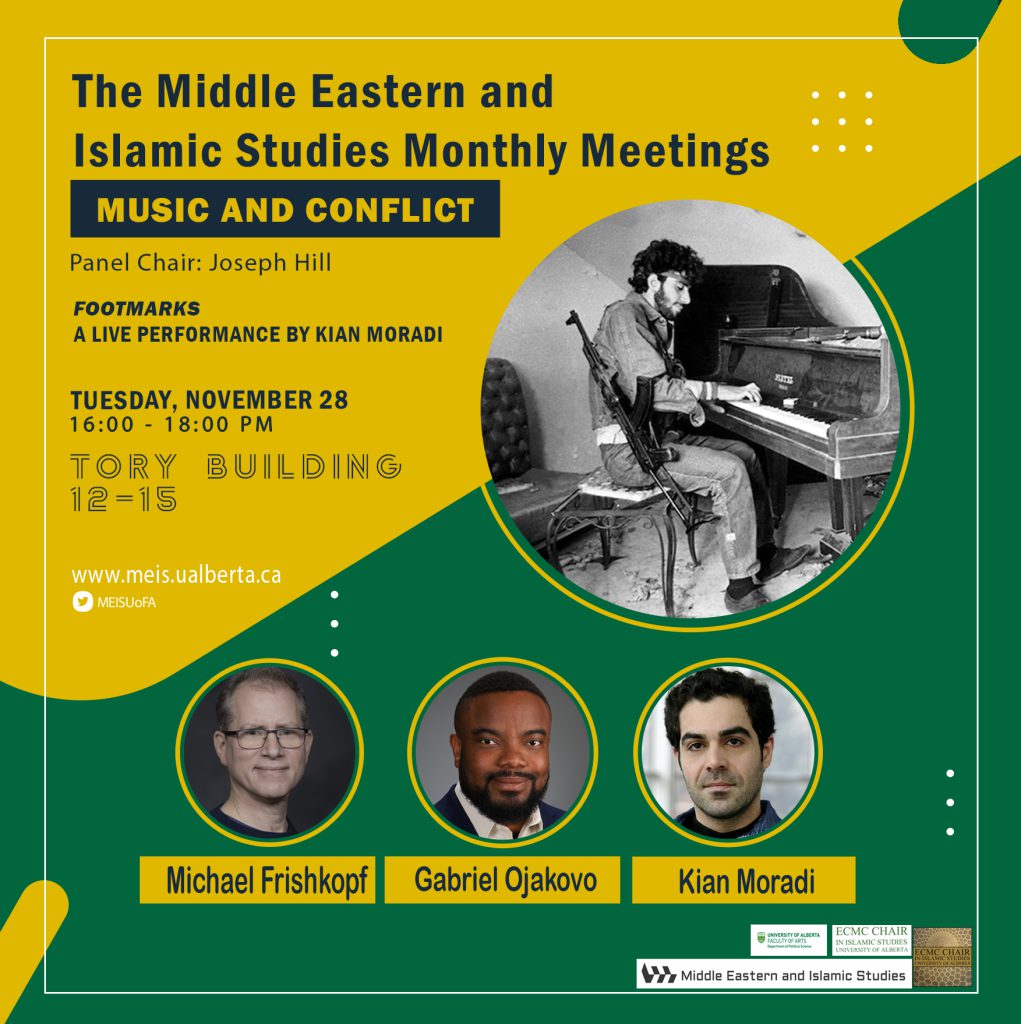
Our inaugural meeting will feature a panel discussion titled “#Music_and_Conflict“, with Professor #Michael_Frishkopf and Dr. #Gabriel_Ojakovo, chaired by Dr. #Joseph_Hill. The program will also include a live music performance by #Kian_Morad, followed by refreshments, a meet & greet, and informal networking.

We invite you to join us on Tuesday, November 28, from 4:00 to 6:00 PM, at Tory Building 12-15.

Anthropology PhD Student receives Izaak Walton Killam Memorial Scholarship

Anthropology PhD Student receives Izaak Walton Killam Memorial Scholarship

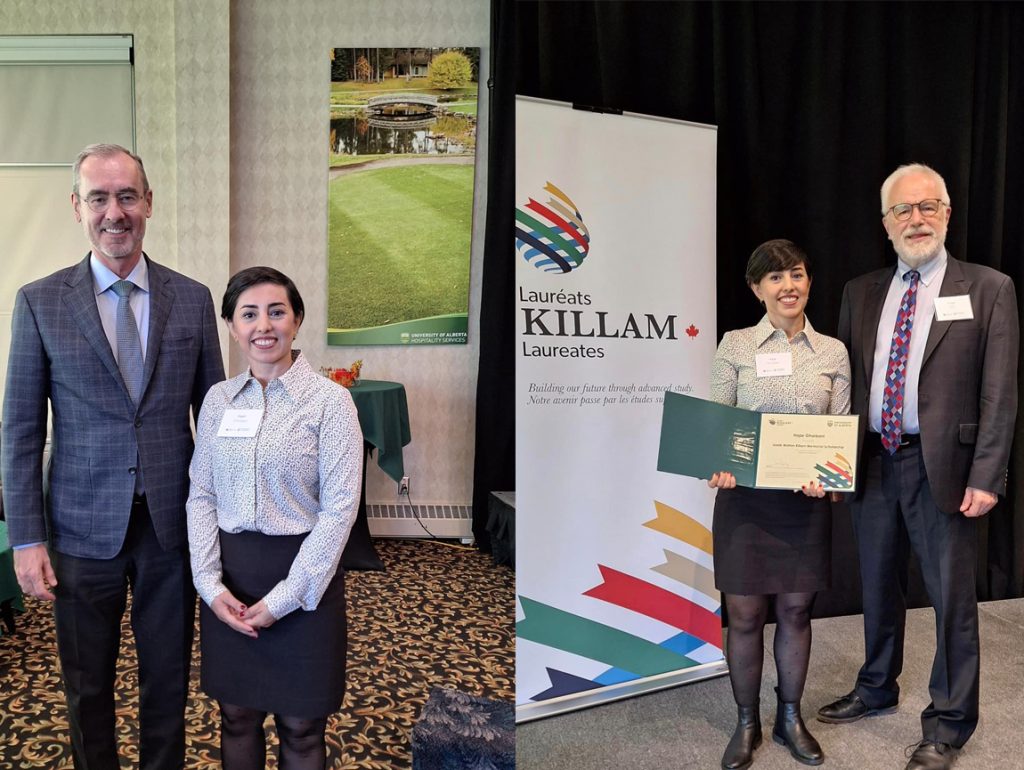
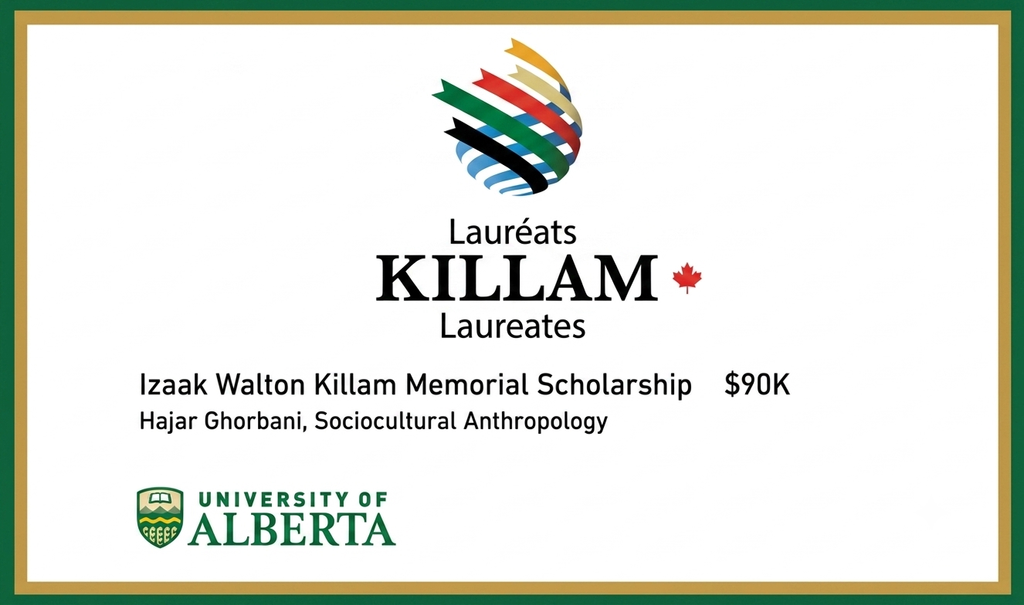
Hajar Ghorbani has received an Izaak Walton Killam Memorial Scholarship for her continued exceptional performance in the Anthropology doctoral program:

https://www.ualberta.ca/anthropology/about-anthropology/anthropology-news/2023/09-sept-12-dec/anthropology-phd-student-receives-the-izaak-walton-killam-memorial-2021-2022-vanier-canada-graduate-scholarship.html

M. Whitecotton-Carroll – 24 October 2023

The Izaak Walton Killam Memorial Scholarships are the most prestigious graduate awards administered by the University of Alberta. They are awarded to outstanding doctoral students who, at the time of application, have completed at least one year of graduate study. Killam Scholarships are awarded for two years and include a stipend of $45,000 per year. Each award is renewable for a second year upon continued exceptional performance in a doctoral program at the University of Alberta.

Hajar Ghorbani is a sociocultural anthropology PhD student at the University of Alberta specializing in death studies. Her research centers on the intersections of death and modernity, as well as death and politics in Iran and the Middle East. She has been studying death and dying since 2011 and has conducted extensive fieldwork in Iran for six years. Hajar’s contributions to the field include published research in several journal articles and book chapters. She has also played a pivotal role in developing death studies in her country, serving as the editor of The Social Studies of Death in Iran (2020). In recognition of her expertise, Hajar Ghorbani was invited as a keynote speaker at the Center for Death and Society (CDAS) at the University of Bath, UK, in 2022. Currently, in her doctoral research project titled “Dead Bodies’ Agency and Western Politics”, she is advancing the conventional perspectives in social sciences that assume the living govern the dead. Her work explores the agency of dead bodies that affect the experience and actions of mourners and evoke memories of the past rather than serve their socio-political ends.

University of Alberta Graduate Recruitment Scholarship

University of Alberta Graduate Recruitment Scholarship

Hajar Ghorbani, a Ph.D. student of sociocultural anthropology, is the winner of University of Alberta Graduate Recruitment Scholarship in 2022.

The purpose of the Recruitment Scholarship is to recruit superior graduate students who have the potential to contribute to the University of Alberta’s community and research.

Hajar Ghorbani: SSHRC Vanier Canada Graduate Scholarship Ranked 1st in Canada

Hajar Ghorbani: SSHRC Vanier Canada Graduate Scholarship Ranked 1st in Canada

At the end of May, the Honourable François-Philippe Champagne, Minister of Innovation, Science and Industry, and the Honourable Mark Holland, Minister of Health, announced the recipients of 166 Vanier Canada Graduate Scholarships and 70 Banting Postdoctoral Fellowships.

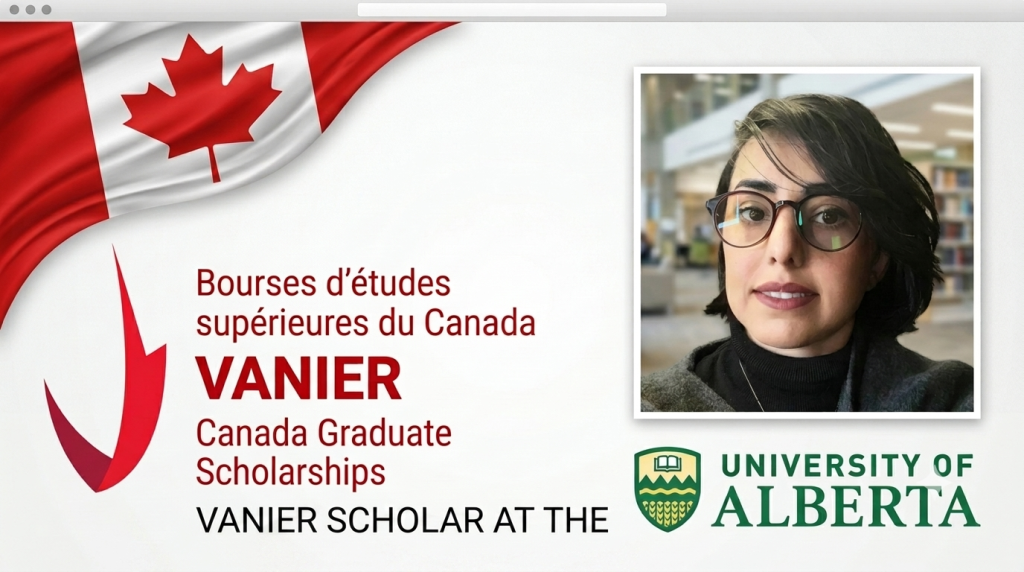
Congratulations to #UAlberta‘s Hajar Ghorbani, Ph.D Student of Anthropology, for being named a 2023-2024 Vanier Scholar and ranking 1st out of 193 SSHRC applicants in Canada. Her research proposal is titled, Dead Bodies’ Agency in Iran and Western Politics: The Woman, Life, Freedom Movement in Iran and its International Political Impacts.

Calls For Book Chapters

Calls For Book Chapters

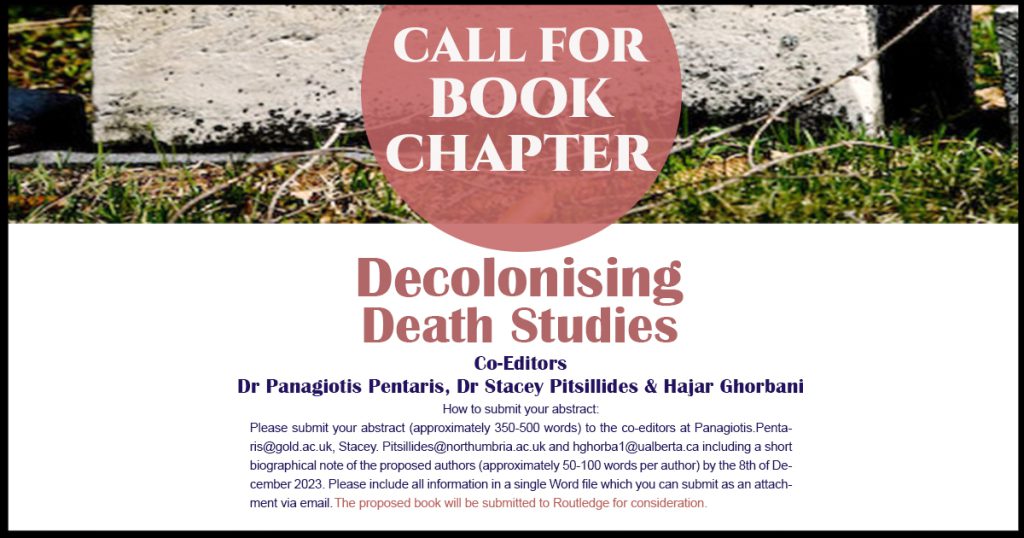
Title: Decolonising Death Studies

Co-Editors: Dr Panagiotis Pentaris, Dr Stacey Pitsillides & Hajar Ghorbani

Overview

Social and cultural factors can strongly influence how we approach death and dying, including attitudes towards death, rituals and practices surrounding death, and end-of-life care. The World Health Organization notes that understanding these factors is important for improving the quality of life and care for individuals facing life-limiting illnesses (WHO, 2021).

Hamilton et al. (2022) note that current knowledge in death studies tends to be influenced by Western views, conforming identities, specific disciplines, the English language, and a certain generation, which can limit its application to policy and practice. The authors argue that decolonising death studies requires exploring the nature of knowledge that underpins claimed expertise in this area, which has universal implications for policies, practices, theory, and research. This is not a new argument, but one which was noted in 1978 by Lofland, critiquing the happy death movement’s lack of diversity, claiming that its proponents were predominantly heteronormative, white and affluent. More contemporary research groups in death studies, like the Queer Death Studies Network (2016) and the Collective for Radical Death Studies, address this by collecting a wider body of literature in the field of death studies.

The increasing diversity and plurality of populations around the world necessitates further attention to diversifying evidence and knowledge to ensure that it effectively serves its beneficiaries (Mokhov and Pentaris, 2022). However, there is potential risk for re-colonising knowledge in this area due to the persistence of English-speaking, Western, and conforming expertise in the field that may or may not understand the connected histories of colonialism. To address this, networks of knowledge and expertise that challenge these limitations and seek to avoid the risk of re-colonisation to broaden the case of knowledge and key texts used by death studies researchers are needed. Such networks may be physical, contextual or digital, but they always lead to collective discourses that break free from the colonisation of death studies.

With that in mind, this book is looking to host the space for an interdisciplinary, international, especially from under-represented groups, dialogue which seeks to advance our exploration of both knowledge outside of the colonised and the degree of the current knowledge’s applicability in the field. Additionally, and drawing from Jansen’s (2019) thesis on the politics of knowledge focusing on the lack of postcolonial, indigenous and critical knowledge, the proposed book will become a beneficial tool for its ability to pool resources and expertise. This can help reduce gaps in the current knowledge base.

focusing on the exploration of the colonisation, re-colonisation and decolonisation of death studies – no matter the expertise of the contributors (e.g., assisted dying, AI and grief, art-based practices with dying individuals, etc.) – are welcome. The volume is particularly interested in the inclusion of minoritised voices and perspectives, in the collaboration of authors with people with lived experience, as well as the learning from different geographies and disciplines. Further, proposals linked with any of the many global issues and phenomena and how those manifest on the experiences of death, dying and bereavement are welcome. This volume will also welcome shorter forms of writing, for example: experiential essays, reflections on practice wisdom or autobiographic accounts.

The proposed book will be submitted to Routledge for consideration.

If you wish to discuss your idea about a contribution before submitting an abstract, please contact the coeditors directly.

How to submit your abstract 

Please submit your abstract (approximately 350-500 words) to the co-editors at Panagiotis.Pentaris@gold.ac.ukStacey.Pitsillides@northumbria.ac.uk and hghorba1@ualberta.ca including a short biographical note of the proposed authors (approximately 50-100 words per author) by the 8th of December 2023. Please include all information in a single Word file which you can submit as an attachment via email.

FEEL FREE TO SHARE WITH YOUR CONTACTS
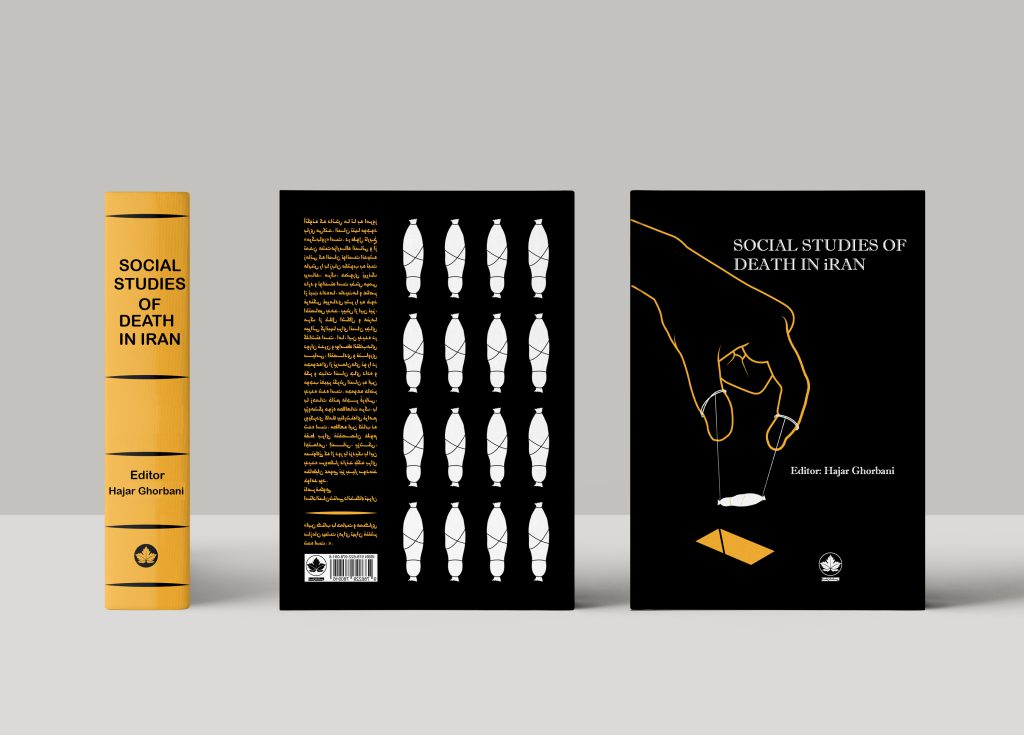
SOCIAL STUDIES OF DEATH IN IRAN

SOCIAL STUDIES OF DEATH IN IRAN

this edited volume, Hajar played a pivotal role, commencing with proposal
preparation and funding application from Tehran’s municipality and Behesht-e Zahra cemetery. She
successfully assembled twenty-five distinguished scholars from diverse fields in social sciences and
humanities across four countries. Engaging actively with each contributor, she fostered insightful discussions
to align their chapters seamlessly with the book’s overarching themes. With refinement, she ensured a
coherent integration of ideas and unwavering commitment to the central concepts. Beyond editing, Hajar
authored the book’s introduction and a chapter of her own.

Izaak Walton Killam Memorial Scholarship Awards

Izaak Walton Killam Memorial Scholarship Awards

The Izaak Walton Killam Memorial Scholarships are the most prestigious graduate awards administered by the University of Alberta. They are awarded to outstanding doctoral students who, at the time of application, have completed at least one year of graduate study.

Cultural Semiotics of Gravestones’ Visual Signs in Isfahan Takht-e Fulad  Cemetery: The Sing of Combs

Cultural Semiotics of Gravestones’ Visual Signs in Isfahan Takht-e Fulad Cemetery: The Sing of Combs

This paper (presentation) is a part of my fieldwork in Isfahan Takht-e Fulad cemetery in 2011.

The Takht-e Foulad cemetery is located in Isfahan and the south of Zayandeh-rood River. This cemetery took its power from the Safavid dynasty, which was a Shiite dynasty. [Azimi, 1379 AP., p.193]. The gravestones in Takht-e Fulad are of three kinds: horizontal or horizontal box and flat, mast and horizontal beside each other) Moreover, it is divided into two main parts (surrounded by Takaya and open.).

The signs on the gravestones in this cemetery can be divided into two signs, including visual signs and textual signs. By observing the pictorial and textual signs on the gravestones in the Takht-e fulad and interpreting them, what is revealed at first is that these signs express the job or profession of the deceased person. To find more precise meanings for these signs, we should find out the cultural relationship of these graphic patterns besides other signs on the gravestone. Combs are carved along with turbah, rosary, and some other signs, in some of the gravestones in this cemetery.

In the logic of determining the signs on the gravestones, the issue of being literate or illiterate in traditional culture is of great importance. So it seems in the era in which most people were illiterate. The text on the gravestone was a sign of the higher dignity of the deceased person, the best way to convey some information about the deceased person and his/her profession, and some other essential traits of that person, especially in the domain of religious values, was pictorial signs. In the past, signs like a wooden comb, rosary, and turbah were the distinguishing religious factors, and this was because of the presence of religious minorities in the city (Zoroastrians and Armenians).

For reading the whole paper please click: Cultural Semiotics of Visual Signs of Gravestones in Isfahan Takht-e Fulad cemetery

The Bureaucratic Professionalization of Funeral Rites in Tehran’s Behesht-e Zahra Cemetery

The Bureaucratic Professionalization of Funeral Rites in Tehran’s Behesht-e Zahra Cemetery

This article is a part of my fieldwork at the Tehran’s Behesht-e Zahra cemetery from 2014-2015. I published another version of this idea in Persian in Iran in 2017. In the first version, I had a collaboration with Jabbar Rahmani, anthropologist, and this version I had a collaboration with Zohreh Bayatrizi, sociologist. The idea of these papers came to my mind during my fieldwork in the cemetery.

[…] Tehran’s current cemetery is called Behesht-e Zahra (literally, The Paradise of Zahra, named after Prophet Mohammad’s daughter) first opened on 314 ha of land in the southern outskirts of the city in 1970 in a bid to provide a permanent and centralized burial site for its rapidly growing population. Up until then local residents had buried their dead in one of the several graveyards within the city (Behesht-e Zahra, undated).1 Although at first the cemetery struggled to find a taker for its first grave, due to its distance from the city, lack of high-speed public transit, and scarcity of car ownership at the time, it now has over 1.5 million graves and has expanded to incorporate an additional 110 ha in 1997 and another 160 ha in 2009. The eight year war with Iraq (1980–1988) created a sharp rise in burials for the fallen soldiers who were buried in a dedicated parcel and gave the cemetery additional political and sentimental significance. A massive development project began in 1989 with the death of Ayatollah Khomeini, founder of the Islamic Republic, which led to the creation of a mausoleum and a major cultural, religious and tourist complex adjacent to the cemetery. With the expansion of car ownership and the extension of the subway line, the cemetery currently accommodates on average about 15,000 visitors per day with a major spike on the weekends. There are 164 lots in the cemetery, 18 of which are dedicated to the ‘martyrs’ and their parents, 3 to journalists, cultural and entertainment figures, and one to organ donors. These lots are located in prime spots in the older part of the cemetery, which are easier to access and highly sought after. The vast majority of the remaining lots are divided into one-, two-, and three-tier graves. One-tier graves in the new parts of the cemetery can be obtained free of charge. Multi-tired graves and graves in more desirable plots are up for sale.

Up until 1991, the cemetery had one building, which was a dedicated ablution (ritual washing and purification) facility. In that year, the Behesht-e Zahra Organization was officially created and a building built using Iranian and Islamic architectural motifs to house the morgue, ablution facility, reception, registration, banking and other bureaucratic offices. Although Behesht-e Zahra is officially run by the City of Tehran, it was forced to become financially self-sufficient in 1993 with revenues generated through fees for burial services as well as the sale of family mausoleums and multi-level graves, surcharges for burials in the older parcels, and renting out commercial space for flower shops, headstone shops, and other related services (Behesht-e Zahra, undated).

As a result of the above developments, the Behesht-e Zahra Organization has expanded rapidly, creating various bureaucratic arms to cope with a variety of tasks from the daily handling of bodies, to ongoing maintenance, event planning for special occasions (prime among them the anniversary of Ayatollah Khomeini’s death every June), human resources management, and long term strategic planning. Here we will focus only on the professionalization and bureaucratization of the funeral rituals, that is the handling of the body from when it arrives at the cemetery until it
has been buried, including corpse washing, wrapping, prayers, graveside rites, and burial.

For buying the whole article please click: https://link.springer.com/chapter/10.1007/978-3-030-18826-9_7 or receiving it directly please email me: hghorba1@ualberta.ca

Risk, mourning, politics: Toward a transnational critical conception of grief for COVID-19 deaths in Iran

Risk, mourning, politics: Toward a transnational critical conception of grief for COVID-19 deaths in Iran

Mourning with the world: The loneliness of grief in a pandemic

Zohreh, Bayatrizi, Hajar Ghorbani and Reza Taslimitehrani

[…] In the case of COVID-19 deaths, we see these dynamics at play again on local, national and transnational scales. The emerging evidence in Iran indicates that contagion both as a biological fact but also as a social fear and stigma might have led to the increasing loneliness and even stigmatization of the dying and the grieving relatives. In personal interviews, survivors identified separation from the dying and dead relatives as the worst aspect of grief during contagion. A woman who had managed to slip into the ICU room and seen her father for a last time before he died was deeply distraught by the memory of her father’s loneliness. Her distress was renewed with the loneliness of his funeral:

They didn’t let us get close. We were at a distance, struggling to contain ourselves. They didn’t show us his face one last time. We didn’t see it. And my sister says . . . she cannot believe that it was him that they put in the grave. This type of departure, this estrangement, adds to our sorrows. In his last days he was awaiting us in the hospital, alone. . . . I constantly wonder how he must have expected us to visit him. I hope he knows our regret. I always think only if they had shown me his face. My dad’s face. . . . (SZ, April 2020)

Another young woman who lost her grandfather during the pandemic talked about the lingering pain of the lonely funeral:

The cemetery was terrible. Our family is very attached to each other. But we had no one there. . . . Even now my father and uncle complain about the loneliness of it. . . . I’m certain that none of us has accepted it yet because the usual ceremonies were not held, we didn’t go to the mosque and no one was there for the burial, except for us (RK, April 2020)

The lack of physical contact compounded the loneliness for mourners, a fact that is not surprising especially given that grief is an embodied and relational experience (McCarthy and Prokhovnik, 2014):

The loneliness is one thing, the absence of a shoulder to cry on. The worst part of it is that you cannot hold your loved ones. The lack of physical interaction causes the most damage. (AJ, April 2020)

The fear of biological contagion clashed with the social norms of collective mourning in Iran, where families and friends gather around the bereaved for days and where it is deemed cruel to leave them alone. Where mourning ceremonies have traditionally been an occasion for coming together and setting difference aside, the fear of contagion drove some families apart. One interviewee who had lost his brother took offence to the fact that some of their close relatives had shunned them for fear of the virus: ‘My uncle’s family had a banner of condolence made and posted outside our door when we were asleep at home. They didn’t even bother to ring the bell and speak with us from a distance.’ Conversely, a young woman was cut off by her sister’s family after she refused to visit them at home and in-person out of concern for contracting the virus (for more on the family dynamics of disease, see Sobel and Cowan, 2003).

For reading the whole please article clik:https://journals.sagepub.com/doi/10.1177/00113921211007153